Valid Axis ANVE Exam Prep & New ANVE Dumps Ebook
Wiki Article
2026 Latest Real4test ANVE copyright and ANVE copyright Free Share: https://drive.google.com/open?id=1ifpkFPgRNLihU5poQexvZFpJyarlotes
Our experts generalize the knowledge of the exam into our ANVE exam materials showing in three versions. PDF version of ANVE study questions - support customers' printing request, and allow you to have a print and practice in papers. Software version of ANVE learning guide - supporting simulation test system. App/online version of mock quiz - Being suitable to all kinds of equipment or digital devices, and you can review history and performance better. And you can choose the favorite one.
The Axis Network Video Exam certification program is divided into two levels: ANVE Basic and ANVE Advanced. The ANVE Basic certification is designed for professionals who are new to the network video industry or have limited experience in the field. The ANVE Advanced certification is designed for more experienced professionals who want to further enhance their knowledge and skills in network video surveillance.
>> Valid Axis ANVE Exam Prep <<
New ANVE Dumps Ebook | Exam ANVE Materials
Real4test has made the ANVE exam dumps after consulting with professionals and getting positive feedback from customers. The team of Real4test has worked hard in making this product a successful Axis ANVE Study Material. So we guarantee that you will not face issues anymore in passing the Axis ANVE certification test with good grades.
Axis ANVE Certification Exam is a valuable asset for professionals who want to enhance their career prospects in the security and surveillance industry. It demonstrates their commitment to excellence and provides them with a competitive edge in the job market. With the rapid growth of network video technologies, the certification is becoming increasingly popular among professionals who want to stay up-to-date with the latest developments in this field.
Axis Network Video Exam Sample Questions (Q192-Q197):
NEW QUESTION # 192
If the subject is 3 m (10 ft) away, what is the pixel density for a 1920x1080 camera?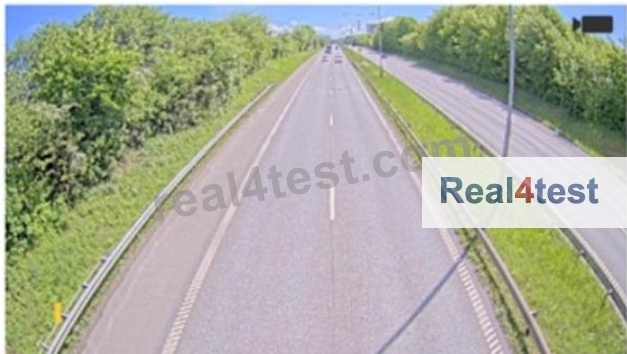
- A. 162 px/m (54 px/ft)
- B. 576 px/m (192 px/ft)
- C. The information is insufficient
- D. 324 px/m (108 px/ft)
Answer: A
Explanation:
For a 1920x1080 camera, the pixel density at a distance of 3 meters (10 feet) can be calculated using the formula for pixel density (pixels per meter/foot). Given the resolution and distance, the pixel density is 162 pixels per meter (54 pixels per foot). Axis provides guidelines and tools for calculating pixel density to ensure the camera setup meets the required image quality for identification and recognition purposes in their technical resources and planning tools.
NEW QUESTION # 193
Axis cameras support the ONVIF and VAPIX APIs. Which of the following is true?
- A. The ONVIF API is used to manage video configuration, while VAPIX used for audio setup
- B. The VAPIX API is Axis' own API which supports the latest Axis camera capabilities
- C. The VAPIX API is used to manage video configuration, while ONVIF is used for audio setup
- D. The ONVIF API is Axis' own API which supports the latest Axis camera capabilities
Answer: B
Explanation:
VAPIX is Axis' proprietary API (Application Programming Interface) that enables integration and management of Axis network video products. It allows developers to access a wide range of functionalities, such as video streaming, event management, and configuration settings, specifically tailored to leverage the latest capabilities of Axis cameras. ONVIF (Open Network Video Interface Forum) is an industry standard that facilitates interoperability between IP-based security products regardless of manufacturer, supporting basic functionalities for video and audio streaming, PTZ control, and event handling but not exclusively tailored to the latest Axis camera features.
NEW QUESTION # 194
How can using PoE to power cameras help keep them running during a power outage?
- A. Since PoE cameras are centrally powered by the server, you will only need to add backup power to the server to keep the system running
- B. PoE cameras use less cabling, allowing backup power supplies to last longer
- C. The PoE standard requires connected devices to include backup batteries, to allow for network dropouts
- D. PoE cameras are centrally powered from the Ethernet switches which are backed up by uninterrupted power supply (UPS)
Answer: D
NEW QUESTION # 195
In a dark indoor environment one single Axis illuminator is available. At a distance of 1 m (3 ft 3 in) away from the illuminator the light intensity is 1024 lux. At what distance from the light source will the light intensity be 256 lux?
- A. 4m{13 ft 1 in)
- B. 8 m (26 ft 3 in)
- C. 2 m (6 ft 7 in)
- D. 16 m (52 ft 6 in)
Answer: C
Explanation:
The inverse square law of light intensity states that the intensity of light is inversely proportional to the square of the distance from the light source. Given that the light intensity is 1024 lux at 1 meter, we can calculate the distance at which the intensity would be 256 lux.
Since 256 lux is one-fourth of 1024 lux, and the inverse square law states that intensity is proportional to 1/d21
/d
2026 Latest Real4test ANVE copyright and ANVE copyright Free Share: https://drive.google.com/open?id=1ifpkFPgRNLihU5poQexvZFpJyarlotes
Report this wiki page